 Free Bass Transcriptions
Funkify Your Life
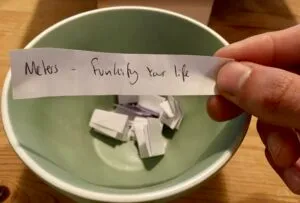
This transcription of ‘Funkify Your Life’ was the winning entry from the November 2018 Subscribers’ Request Competition, picked via the cutting-edge method I call ‘Bits of Paper in a Bowl’.
Meet The Meters
The Meters’ most famous cut, ‘Cissy Strut’ has featured on soundtracks (including Jackie Brown and Lock, Stock and Two Smoking Barrels) and remains a staple of jam nights across the globe. Taken from 1977’s New Directions, ‘Funkify Your Life’ actually shows the band sticking to the tried-and-true funk formula; syncopated basslines, minimal harmonic movement and a laid-back New Orleans ‘second line’ feel.
Every effort was made to capture exactly what George Porter Jr played during each section of the song, although I’ve avoided writing out all 5 minutes note-for-note. I can say with almost 100% certainty that the bass part for the recording was jammed rather than being read from a detailed chart, so this transcription provides an overall picture of the parts for the three different sections.
The track begins by showcasing an unaccompanied George Porter Jr in all his glory. During the first four bars it can be tricky to get a definitive answer about exactly where the one is, and the syncopated accents of the riff don’t make things any easier. Note the use of hammer-ons from open strings in bar 1; it’s worth experimenting with different combinations of fretted and open string A notes throughout the tune in order to make certain phrases easier to play.
The bulk of ‘Funkify Your Life’ is built on a repeated 2-bar groove that outlines Am7 and features numerous variations derived from the A minor pentatonic scale. While the main line is harmonically static, there’s plenty of rhythmic activity; the use of ghost notes provides the part with an almost constant 16th-note rhythm, and the accent on the last 16th-note of the first bar of each phrase prevents the tune from lapsing into generic funk territory.
During the bridge sections (bars 28-35 and 41-52), ‘Funkify Your Life’ follows the James Brown school of funk composition and moves to the IV chord. As with the main groove, the bridges are built on a 2-bar phrase; bridge 1 features a chromatic figure that becomes a common disco bass cliché when played in octaves, while bridge 2 incorporates a series of syncopated popped notes.
At many points on the recording, it’s hard to tell whether the bass is played fingerstyle or slapped. The tone during the introduction suggests a Precision bass with roundwound strings played with a great deal of commitment and conviction — there’s definitely no string tickling going on here! The bridge sections (bars 28-35 and 41-52) feature some popped notes, but it’s unclear as to whether the 16th-notes on beat 1 of each 2-bar phrase are slapped or hard plucked.